KaosLab
Technologies
Details
About the Project
KaosLab: Streamlining Custom Screen-Printing Operations
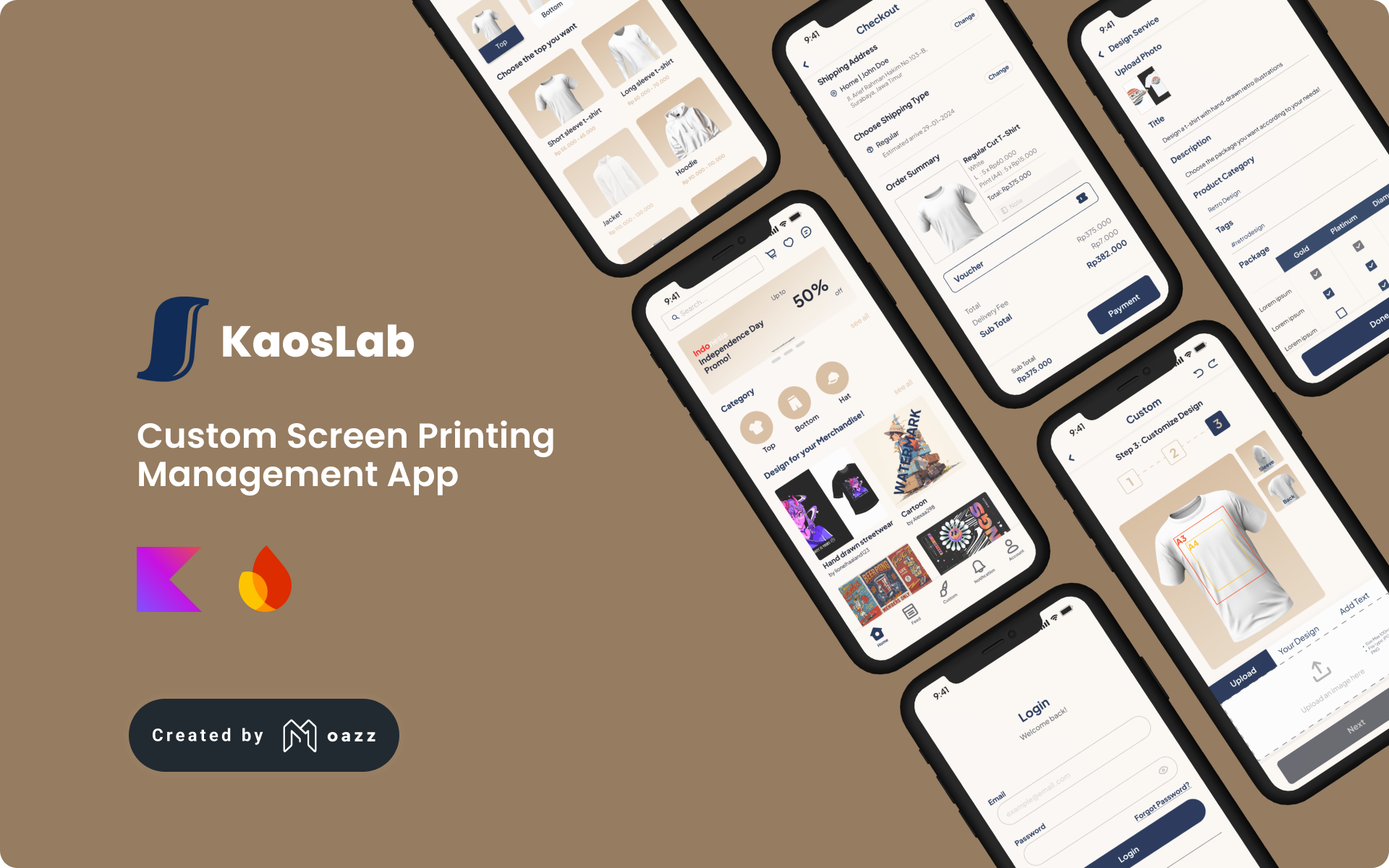
KaosLab is a native Android application designed to digitize the end-to-end workflow of Sablonkaos.id, a screen-printing SME in West Java. As an Android Developer, my primary goal was to architect a solution that automates order management and eliminates the "design bottleneck" that often slows down production. By moving from manual processes to a centralized mobile platform, I enabled the business to handle high volumes of custom orders with significantly improved precision and speed.
Technical Infrastructure & Firebase Integration
The application is built with Kotlin, following a structured architecture to ensure a responsive and maintainable codebase. I leveraged the Firebase ecosystem as a serverless backend to provide a seamless, real-time experience for both the business owner and the customers:
- Cloud Firestore: I implemented Firestore as the primary NoSQL database to manage real-time synchronization of order data, production statuses, and product catalogs. This ensures that any update made by the admin is instantly visible to the customer without requiring manual refreshes.
- Firebase Storage: To handle the core of the business—custom designs—I integrated Firebase Storage to manage high-resolution image uploads. This allows customers to submit their creative assets securely, which are then easily retrieved by the production team for printing.
- Firebase Cloud Messaging (FCM): I developed an automated notification system using FCM. This feature provides transparency by sending real-time push notifications to users regarding their order journey, such as "Payment Confirmed," "In Production," or "Ready for Shipping."
Interactive UI & Development Lifecycle
The user interface was crafted using Android XML and Material Design principles to ensure a professional look and feel. I focused heavily on the Interactive T-Shirt Designer, utilizing custom touch listeners to allow users to manipulate text and images directly on a digital canvas. This "drag-and-drop" functionality empowers customers to finalize their designs in-app, reducing the back-and-forth communication typically required during the design phase.
To ensure a high-quality release, I followed the Waterfall methodology, moving systematically through requirement analysis, system design, and implementation. My quality assurance process included rigorous Blackbox Testing to validate every functional path and User Acceptance Testing (UAT) with the business owner to ensure the app effectively solved real-world operational pain points. KaosLab stands as a practical example of how native Android development and cloud-native services can transform a traditional SME into a digitally-driven enterprise.